Education is evolving rapidly as industries continue to adopt new technologies and working methods. Understanding current Engineering Education Trends helps students recognize how modern education is preparing them for changing professional environments. Because of this shift, colleges are redesigning learning methods to make education more interactive and practical.
Learning through innovation and creativity
Traditional teaching methods are slowly being replaced with activity-based and easy learning approaches. Students are now encouraged to participate in innovation challenges, idea presentations, and collaborative learning sessions. These activities help learners improve creativity, decision-making, and independent thinking.
Our Institutions are also creating opportunities where students can experiment with ideas and develop practical solutions to real-life problems. This learning approach also helps students become more confident while handling practical tasks and team-based activities.
Why are Engineering Education Trends shaping modern classrooms?
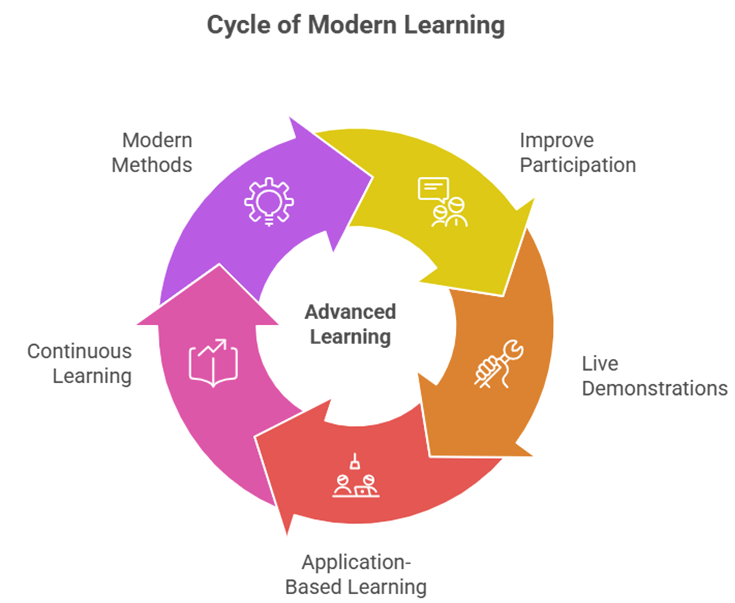
• Discussions improve classroom interaction
• Live demonstrations support practical understanding
• Application-based learning improves participation
• Continuous learning helps students stay updated
• Modern methods support industry-focused education
Read more, to know about the student development in KSRCE.
Industry exposure becoming part of education
Many colleges now focus on connecting students with real-world professional environments during their academic journey. Guest lectures from industry experts, industrial visits, and live project experiences support student skill development and help learners understand workplace expectations early. Exposure to professional practices also improves awareness about career paths and builds confidence before entering the job market.
Focus on Advanced Learning
Current Engineering Education Trends encourage students to explore learning beyond their core subjects. Interdisciplinary learning helps students improve adaptability and understand different professional environments.
• Exposure to different fields
• Better technology skills
• Improved communication skills
• Supports creativity and innovation
• Increases adaptability in workplaces
Building learners for changing career environments
Modern education is now focused on preparing students for continuous growth rather than only academic success. Academic excellence and Curriculum Structure at KSRCE encouraging flexible learning methods that support curiosity, practical understanding, and personal development. As learning methods continue to evolve, students gain better opportunities to improve their skills and prepare themselves for dynamic career environments.
Importance of self-learning in modern education
Students today are encouraged to learn beyond classroom teaching and develop independent learning habits. Online resources, certification platforms, and digital study materials reflect modern Engineering Education Trends by supporting and helping students explore subjects at their own pace. Self-learning improves confidence, problem-solving ability, and subject understanding. It also helps students stay updated with current technologies and changing industry expectations.
As per the World Economic Forum’s Future of Jobs Report, continuous learning, upskilling, and reskilling are becoming essential as nearly 39% of core job skills are expected to change by 2030.