Imagine a field where engineering meets medicine to create technologies that can help doctors diagnose, monitor, and treat patients. That is where Biomedical Engineering comes in.
Quick Insight: Biomedical Engineering combines engineering + biology + medicine to develop healthcare technologies and medical solutions.
Biomedical Engineering is one of the engineering fields students can explore when considering their academic and career options. You can also explore engineering courses and career options at KSR College of Engineering to understand the different branches and opportunities available at KSR College.
What Is Biomedical Engineering?
Biomedical Engineering is a field that applies engineering principles to biology and medicine.
Biomedical engineers work on medical equipment, healthcare devices, biological materials, computer based systems, and technologies that support patient care.
The field brings together knowledge from areas such as electronics, biology, computing, mathematics, and medical science.
What Do Biomedical Engineers Do?
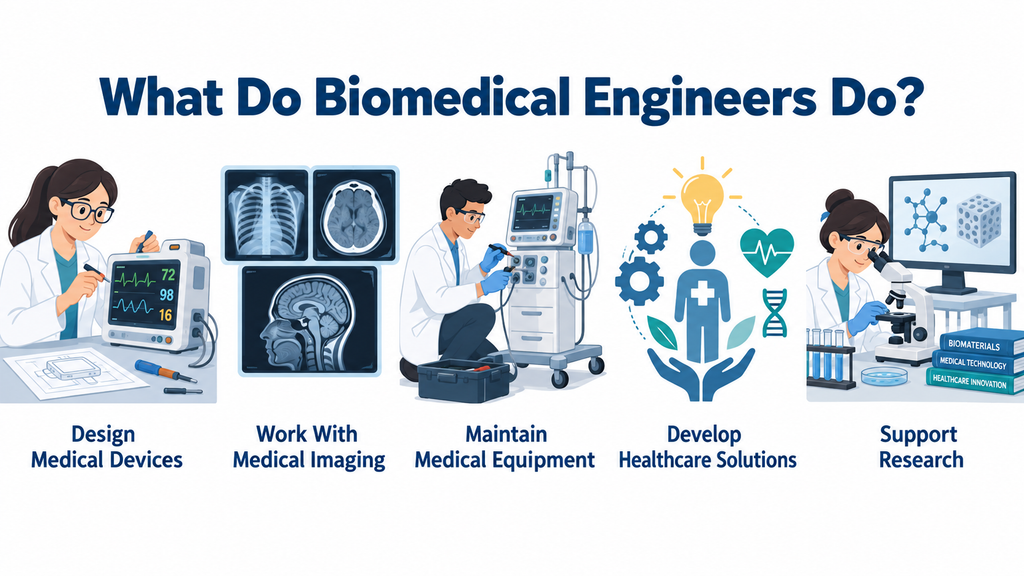
- Design Medical Devices: Develop equipment used for diagnosis, monitoring, and treatment.
- Work With Medical Imaging: Support technologies such as X ray, CT, and MRI used to examine the human body.
- Maintain Medical Equipment: Install, inspect, test, maintain, repair, and calibrate healthcare equipment.
- Develop Healthcare Solutions: Apply engineering and science to solve medical problems.
- Support Research: Work on new technologies, medical devices, biomaterials, and healthcare systems.
In Simple Words: Biomedical engineers help connect technology with healthcare to make medical processes safer, smarter, and more effective.
Biomedical engineering involves a wide range of technical and healthcare applications. The U.S. Bureau of Labor Statistics provides further information on biomedical engineers, including their duties, education, work environment, and career outlook.
Where Is Biomedical Engineering Used?
- Medical Devices: Equipment used for diagnosis and patient monitoring.
- Tissue Engineering: Developing tissues and organs to help repair damaged body parts.
- Biomaterials: Creating materials that can safely interact with the human body.
- Biomechanics: Studying body movement and improving physical function.
- Bioinformatics: Using computers to analyse biological data.
What Does KSR College Offer?
The Department of Biomedical Engineering at K.S.R. College of Engineering was established in 2024 with a student intake capacity of 60.
The department focuses on integrating medicine and bioengineering through education, research, practical learning, and industry interaction.
| KSR Biomedical Engineering at a Glance Established: 2024 MoUs: 5 Patents: 10 International Collaboration: 1 Publications: 20+ Internships: 50+ |
Students interested in the role of technology in healthcare can also explore healthcare innovation through biomedical engineering to learn more about how this field is contributing to modern healthcare.
Explore KSR’s Biomedical Engineering Laboratories
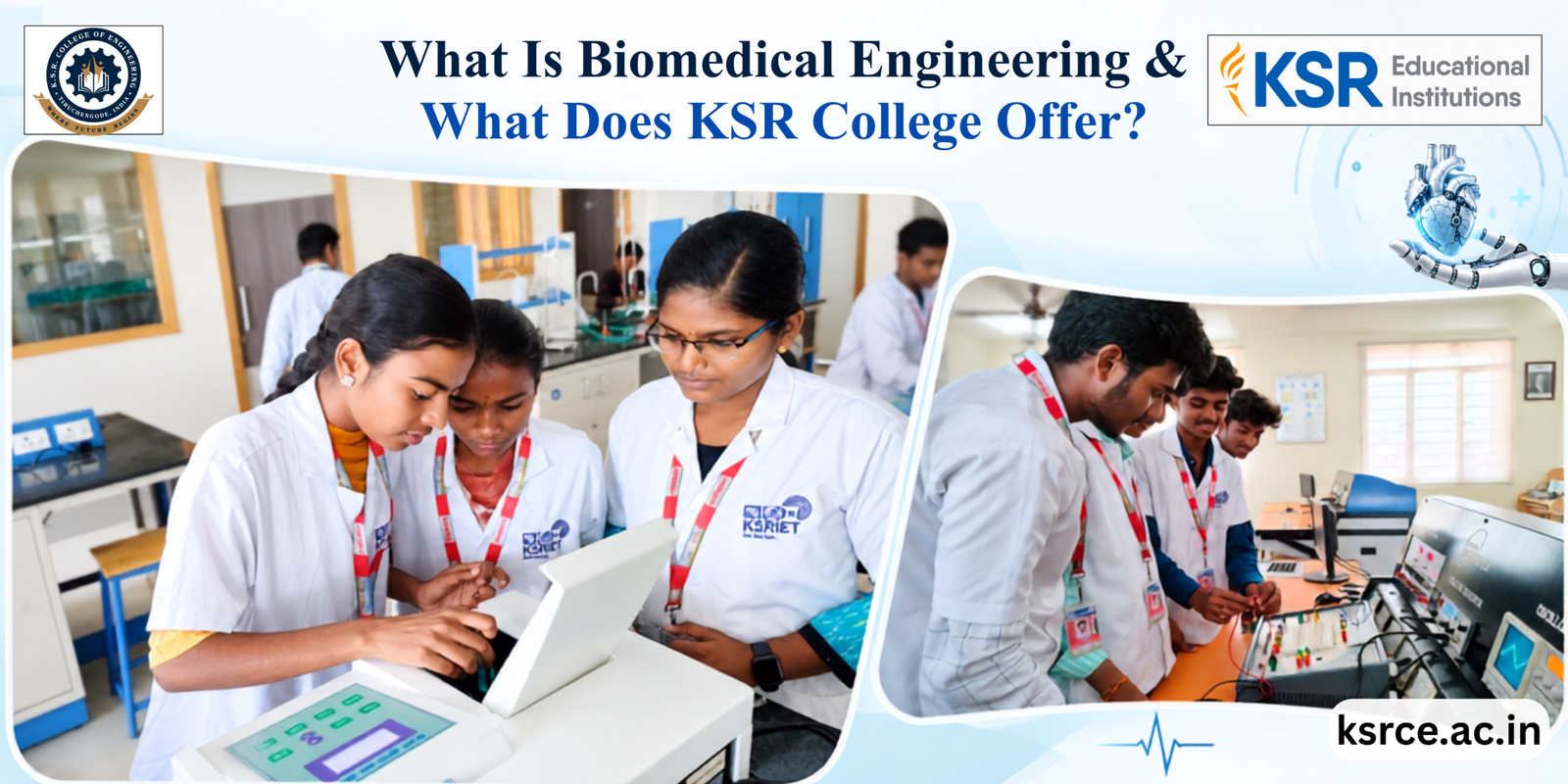
Practical learning is an important part of Biomedical Engineering. KSR College provides five specialised laboratories for students.
- Bioscience Laboratory
- Anatomy and Human Physiology Laboratory
- Fundamentals of Electronic Devices and Circuits Laboratory
- Sensors and Measurements Laboratory
- Biomedical Instrumentation Laboratory
Why These Labs Matter: The five laboratories allow students to connect classroom concepts with biology, electronics, sensors, human physiology, and biomedical equipment.
Career Opportunities
Biomedical Engineering can open career paths in areas such as:
- Medical device companies
- Hospitals
- Healthcare technology
- Medical equipment management
- Research and development
- Biomedical instrumentation
- Medical technology
- Healthcare related industries
Biomedical Engineering is a good option for students who enjoy engineering, technology, biology, and healthcare.
At K.S.R. College of Engineering, students can explore this field through specialised laboratories, research, internships, and industry interaction.
FAQ
1. What is biomedical engineering in simple terms?
It’s the field that applies engineering principles to healthcare — designing medical devices, imaging systems, and equipment used to diagnose, monitor, and treat patients.
2. What kind of jobs can a biomedical engineering graduate get?
Roles in medical device design, hospital equipment maintenance, imaging technology, research and development, and clinical engineering, across hospitals, manufacturers, and research labs.
3. What labs does KSR College’s Biomedical Engineering department have?
Five core labs — Bioscience, Anatomy & Human Physiology, Electronic Devices & Circuits, Sensors & Measurements, and Biomedical Instrumentation.