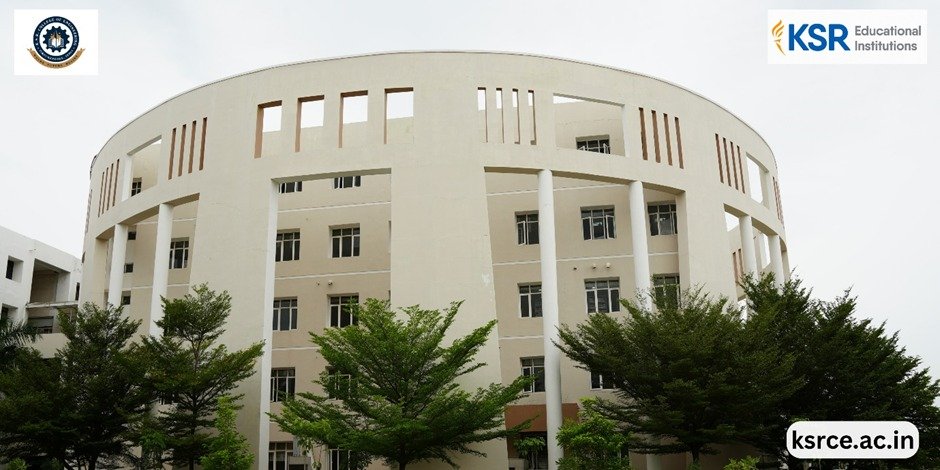
In contemporary higher education, the definition of academic excellence has expanded beyond examination performance and placement statistics. Institutions are increasingly evaluated based on their ability to produce socially responsible, ethically grounded, and strategically capable graduates. Student Development at KSRCE exemplifies this expanded vision by integrating structured leadership training, sustainability initiatives, cultural literacy, and community engagement into the institutional framework. At K.S.R. College of Engineering, student growth is not treated as an auxiliary activity but as a core educational objective embedded within campus culture.
The relevance of this model is particularly significant for engineering education, where technical expertise must be complemented by adaptability, communication competence, and ethical awareness. Holistic Education in Engineering Colleges requires a multi-dimensional approach that fosters intellectual, emotional, social, and civic development simultaneously. Through platforms such as the Rotary Club at KSRCE, Extension Activities at KSRCE, the Centre for Indian Knowledge Systems, the Centre for Sustainable Development Goals, Women Empowerment Cell at KSRCE, and Eco Club at KSRCE, the institution has established a comprehensive developmental ecosystem.
This report analyzes the structural foundations, operational mechanisms, and long-term impact of Student Development at KSRCE, offering insights relevant to students, educators, institutional planners, and policy observers.
Institutional Clubs as Catalysts for Leadership and Civic Engagement
Institutional clubs serve as the primary operational arm of Student Development at KSRCE. Unlike informal extracurricular gatherings, these platforms function through defined objectives, structured leadership hierarchies, and measurable outcomes. They create an experiential learning environment where students apply classroom concepts within dynamic social contexts.
The Rotary Club at KSRCE plays a pivotal role in shaping civic awareness and ethical leadership. Through structured initiatives such as health awareness campaigns, blood donation drives, and rural development outreach, students gain exposure to societal realities beyond campus boundaries. These programs represent effective Social Responsibility Initiatives in Colleges, demonstrating how engineering education can intersect with humanitarian engagement.
Similarly, Extension Activities at KSRCE provide opportunities for community-based experiential learning. Activities include:
- Village adoption programs
- Environmental conservation drives
- Educational outreach in rural schools
- Public health awareness initiatives
These engagements foster collaboration, empathy, and adaptive problem-solving skills.
Core Analytical Dimensions
The impact of club-based development can be evaluated through:
- Leadership Conditioning – Students rotate leadership roles, building administrative competence.
- Collaborative Intelligence – Group projects enhance negotiation and teamwork capabilities.
- Ethical Decision-Making – Real-world exposure demands responsible action.
- Confidence Acceleration – Public interaction strengthens communication skills.
Practical Applications in Professional Environments
Graduates who actively participate in clubs demonstrate:
- Enhanced presentation skills during campus placements
- Stronger project management abilities
- Improved adaptability in multicultural corporate teams
- Greater resilience under pressure
Common Mistakes in Club Participation
- Viewing clubs merely as certificate-generating platforms.
- Avoiding responsibility due to fear of criticism.
- Failing to connect service work with professional growth.
- Lack of documentation of achievements for career portfolios.
Psychological and Strategic Perspective
Repeated engagement in structured activities creates behavioral reinforcement. Students transition from passive recipients of education to active contributors within institutional and societal ecosystems. Strategically, this aligns Student Development at KSRCE with global standards of Holistic Education in Engineering Colleges.
Academic Centres Driving Cultural, Ethical, and Sustainable Awareness
A defining strength of Student Development at KSRCE lies in its structured academic centres that move beyond conventional subject teaching to foster interdisciplinary awareness and long-term societal thinking. These centres serve as intellectual anchors that ensure development is not limited to activity-based engagement but is supported by theoretical grounding, ethical reasoning, and sustainability-oriented innovation.
The Role of the Centre for Indian Knowledge Systems
The Centre for Indian Knowledge Systems plays a crucial role in contextualizing engineering education within India’s rich scientific, philosophical, and cultural heritage. Rather than treating traditional knowledge as historical content, the centre integrates indigenous innovations, ancient engineering practices, ethical philosophy, and sustainability concepts into modern academic discourse.
Students participate in:
- Workshops on traditional ecological knowledge
- Lectures connecting ancient mathematics to modern computation
- Discussions on ethical engineering from classical philosophical frameworks
- Research-based projects examining indigenous sustainable practices
This integration enhances cognitive depth. Students begin to perceive engineering not merely as technical execution but as socially embedded practice. Within the framework of Holistic Education in Engineering Colleges, such cultural grounding strengthens ethical judgment and intellectual maturity.
Centre for Sustainable Development Goals: Global Alignment with Local Action
Parallel to cultural grounding, the Centre for Sustainable Development Goals aligns institutional activities with global development priorities. Engineering education today must respond to climate change, resource depletion, and technological inequity. Through sustainability-driven research and project-based learning, this centre operationalizes that responsibility.
Key focus areas include:
- Renewable energy innovation
- Water resource management
- Waste reduction technologies
- Smart infrastructure for sustainable cities
Students undertake mini-projects and research assignments linked to real-world sustainability indicators. This approach transforms sustainability from abstract discussion into measurable academic output.
In this context, Extension Activities at KSRCE often intersect with sustainability missions, reinforcing classroom theory through field application.
Analytical Framework: Why Academic Centres Matter
The impact of centre-based development can be analyzed through five dimensions:
- Interdisciplinary Integration – Bridging engineering with ethics, ecology, and culture.
- Research Orientation – Encouraging inquiry beyond syllabus boundaries.
- Global Competency Development – Preparing students for international professional contexts.
- Policy Awareness – Familiarizing students with development frameworks and sustainability metrics.
- Long-Term Strategic Thinking – Encouraging systemic problem-solving approaches.
Practical Applications in Academic and Professional Settings
Students trained under this structured model demonstrate:
- Improved research proposal writing skills
- Greater innovation capacity in final-year projects
- Ability to align technical solutions with environmental and social impact
- Stronger readiness for higher studies and interdisciplinary careers
Common Mistakes Students Make
- Treating centre activities as optional or peripheral.
- Participating without connecting learning to academic projects.
- Ignoring sustainability considerations in technical design.
- Overlooking ethical implications in innovation processes.
Role of Modern Tools and Technology
Technology strengthens these centres’ effectiveness:
- Data analytics tools for sustainability tracking
- Simulation software for environmental modeling
- AI-assisted research tools
- Digital knowledge repositories
By integrating technology with cultural and sustainability awareness, Student Development at KSRCE maintains relevance in a rapidly evolving digital ecosystem.
Psychological and Strategic Perspective
Exposure to interdisciplinary frameworks broadens cognitive flexibility. Students develop systems thinking, which is essential in addressing complex, real-world challenges. Strategically, this positions graduates not just as engineers but as responsible innovators capable of long-term impact.
Extension and Outreach Programs Bridging Campus and Community
A core dimension of Student Development at KSRCE is its structured extension and outreach ecosystem, which systematically connects academic learning with societal engagement. While classroom instruction builds theoretical competence, outreach initiatives ensure that knowledge is tested, refined, and validated within real community contexts. This alignment reflects the broader philosophy of Holistic Education in Engineering Colleges, where societal contribution becomes a measurable educational outcome.
Structural Framework of Extension Engagement
Extension Activities at KSRCE operate through organized planning cycles, including need assessment, program design, field implementation, and evaluation. These activities often focus on rural development, environmental sustainability, public health awareness, and educational outreach.
Key outreach initiatives typically include:
- Village adoption and infrastructure assessment
- Renewable energy awareness programs
- Water conservation and sanitation drives
- Digital literacy training in underserved communities
Such programs create a two-way learning process. While communities benefit from technical awareness, students gain exposure to real-world constraints such as limited resources, social dynamics, and implementation challenges.
Role of the Rotary Club at KSRCE in Structured Outreach
The Rotary Club at KSRCE strengthens outreach through service-driven leadership. By organizing blood donation camps, medical awareness programs, and disaster relief support, the club institutionalizes Social Responsibility Initiatives in Colleges. These structured service platforms enable students to internalize civic duty as part of professional identity formation.
Through collaboration with community stakeholders, students develop:
- Stakeholder communication skills
- Event coordination competence
- Ethical accountability
- Crisis-response adaptability
This integration ensures that service learning becomes embedded within Student Development at KSRCE rather than remaining symbolic.
Analytical Dimensions of Community-Based Learning
The effectiveness of outreach programs can be evaluated across five dimensions:
- Applied Technical Relevance – Engineering concepts gain contextual clarity.
- Civic Intelligence Development – Students understand governance and policy frameworks.
- Adaptive Problem-Solving – Real-world constraints refine innovation approaches.
- Empathy Formation – Direct community interaction strengthens emotional intelligence.
- Leadership Accountability – Students manage real outcomes, not simulated exercises.
Practical Professional Applications
Graduates exposed to structured outreach demonstrate stronger workplace readiness. In corporate or entrepreneurial environments, they are better equipped to:
- Design user-centered products
- Assess social and environmental risks
- Lead multidisciplinary teams
- Communicate with diverse stakeholders
Such competencies significantly enhance employability and long-term career growth.
Common Mistakes in Outreach Participation
- Viewing extension work as compulsory rather than transformative.
- Focusing solely on event execution without reflection.
- Neglecting documentation and impact assessment.
- Failing to integrate field insights into academic research.
Technology-Enabled Community Engagement
Modern tools enhance outreach effectiveness:
- GIS mapping for rural resource assessment
- Mobile data collection applications
- Social media campaigns for awareness dissemination
- Digital dashboards for monitoring project impact
By integrating technology into field engagement, Student Development at KSRCE ensures measurable outcomes and scalable impact.
Psychological and Strategic Perspective
Community engagement fosters resilience and adaptive intelligence. Students encounter unpredictable scenarios that require composure, empathy, and decisive action. Strategically, this experience cultivates responsible leadership a critical attribute in dynamic professional environments.
Through sustained outreach integration, Student Development at KSRCE transforms engineering education into a socially responsive and ethically grounded journey.
Inclusive Development Platforms Promoting Equity, Empowerment, and Environmental Responsibility
An essential pillar of Student Development at KSRCE is its commitment to inclusive growth. Academic excellence alone cannot define institutional success unless it is accompanied by equitable participation, gender sensitivity, and environmental consciousness. Inclusive development platforms ensure that every student, irrespective of background, has access to leadership opportunities, skill-building initiatives, and social engagement experiences.
Women Empowerment Cell at KSRCE: Structured Gender Equity Initiatives
The Women Empowerment Cell at KSRCE functions as a strategic institutional mechanism dedicated to promoting gender equity and leadership participation among women students. Rather than limiting its role to awareness campaigns, the cell operates through structured programming that includes:
- Leadership and entrepreneurship workshops
- Legal literacy sessions on rights and workplace safety
- Career mentorship programs
- Confidence-building and public speaking forums
These initiatives directly contribute to Holistic Education in Engineering Colleges by ensuring balanced representation in technical and administrative roles. Through active involvement, women students develop leadership confidence, professional clarity, and negotiation skills.
Eco Club at KSRCE: Environmental Stewardship as Leadership Practice
Environmental responsibility forms another integral component of inclusive development. The Eco Club at KSRCE institutionalizes sustainability awareness by organizing:
- Tree plantation drives
- Waste segregation campaigns
- Campus cleanliness initiatives
- Renewable energy awareness sessions
Such programs reinforce Social Responsibility Initiatives in Colleges while embedding sustainability into everyday student culture. Importantly, environmental activities are not symbolic gestures; they are designed to create measurable ecological impact and long-term behavioral change.
Analytical Framework for Inclusive Development
The impact of empowerment and sustainability platforms can be evaluated across five dimensions:
- Equitable Access to Leadership – Ensuring diverse participation in decision-making roles.
- Confidence Amplification – Providing structured platforms for skill demonstration.
- Sustainability Integration – Linking environmental awareness with academic disciplines.
- Policy Awareness Development – Understanding regulatory frameworks and rights.
- Cultural Sensitivity Enhancement – Encouraging respectful and inclusive dialogue.
Practical Applications in Academic and Corporate Contexts
Students actively engaged in inclusive platforms demonstrate:
- Improved workplace adaptability in diverse teams
- Stronger ethical awareness in organizational settings
- Higher emotional intelligence
- Increased initiative-taking behavior
These attributes significantly enhance long-term career progression and leadership credibility.
Common Mistakes in Inclusive Participation
- Treating empowerment sessions as compliance requirements.
- Assuming sustainability efforts are unrelated to engineering careers.
- Limiting participation to observation rather than active contribution.
- Ignoring reflection and feedback mechanisms.
Role of Technology in Inclusive Development
Modern technology enhances inclusivity through:
- Digital grievance redressal systems
- Online mentorship platforms
- Environmental data tracking dashboards
- Virtual awareness seminars and webinars
By leveraging digital tools, Student Development at KSRCE ensures accessibility, transparency, and scalability.
Psychological and Strategic Perspective
Empowerment initiatives reshape self-perception. When students feel valued and represented, intrinsic motivation increases. From a strategic standpoint, inclusive institutions attract diverse talent and foster innovation through varied perspectives.
Through the coordinated efforts of the Women Empowerment Cell at KSRCE and Eco Club at KSRCE, Student Development at KSRCE reinforces its commitment to balanced growthwhere leadership is inclusive and sustainability is embedded.
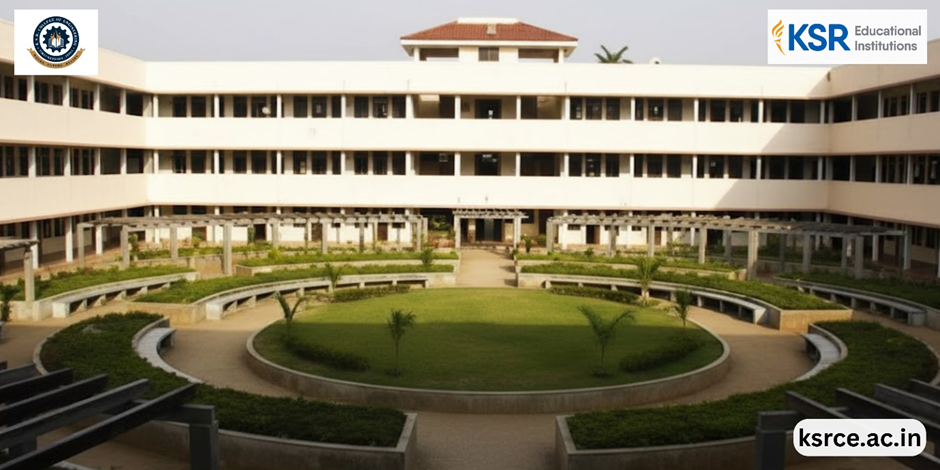
Institutional Philosophy and Integrated Development Model Architecture
The structural strength of Student Development at KSRCE lies not only in individual clubs or centres but in the coherent institutional philosophy that integrates them into a unified developmental architecture. At K.S.R. College of Engineering, student growth is conceptualized as a layered system in which academic instruction, ethical awareness, sustainability literacy, leadership engagement, and community service function as interconnected domains rather than isolated activities.
Foundational Philosophy
The institutional model is grounded in four guiding principles:
- Academic Excellence with Ethical Responsibility
- Leadership through Service Orientation
- Sustainability as a Design Imperative
- Inclusive Participation as a Development Multiplier
This philosophy reflects the broader framework of Holistic Education in Engineering Colleges, where the goal is to produce engineers who are intellectually competent, socially conscious, and strategically adaptable.
Structural Integration of Clubs, Centres, and Extension Activities
Rather than operating independently, institutional units are interconnected:
- The Rotary Club at KSRCE often collaborates with Extension Activities at KSRCE to implement community-based programs.
- The Centre for Sustainable Development Goals aligns Eco Club campaigns with measurable sustainability indicators.
- The Women Empowerment Cell at KSRCE complements leadership training initiatives within other student forums.
- The Centre for Indian Knowledge Systems supports ethical reflection sessions embedded in outreach projects.
This integrated approach ensures that Student Development at KSRCE functions as a cohesive system rather than a collection of disconnected initiatives.
Analytical Model of Development Architecture
The integrated model can be evaluated using a five-layer developmental framework:
Layer 1: Cognitive Development
Academic curriculum and interdisciplinary centres strengthen analytical reasoning.
Layer 2: Ethical Development
Service initiatives and value-based discussions foster responsible decision-making.
Layer 3: Social Development
Clubs and outreach programs build communication and teamwork capabilities.
Layer 4: Strategic Development
Leadership roles cultivate planning, execution, and evaluation skills.
Layer 5: Civic Development
Community engagement reinforces societal accountability.
This multi-layered architecture ensures that Student Development at KSRCE remains comprehensive and sustainable.
Measurable Outcomes and Performance Indicators
Institutional impact can be assessed through:
- Increased student participation rates in leadership roles
- Enhanced placement performance due to improved soft skills
- Research outputs aligned with sustainability goals
- Positive community feedback from extension initiatives
- Higher student retention and engagement metrics
Such measurable indicators transform development philosophy into quantifiable institutional performance.
Common Strategic Challenges
Even within a strong system, certain challenges may arise:
- Fragmentation between academic departments and clubs.
- Overemphasis on events without structured reflection.
- Limited cross-collaboration between centres.
- Inadequate documentation of impact metrics.
Addressing these challenges requires coordinated planning and continuous evaluation.
Role of Governance and Policy Alignment
Institutional governance ensures that development initiatives align with regulatory frameworks, accreditation standards, and national educational priorities. Policies supporting Social Responsibility Initiatives in Colleges strengthen accountability and sustainability.
Strategically, governance integration ensures that Student Development at KSRCE remains resilient, adaptable, and aligned with emerging global educational trends.
Psychological and Strategic Perspective
An integrated development architecture creates clarity of purpose. When students perceive coherence between academic learning and extracurricular engagement, intrinsic motivation increases. Strategically, this alignment reduces cognitive dissonance and enhances institutional trust.
Long-Term Impact Assessment and Outcome Evaluation Framework
Long-Term Impact Assessment and Outcome Evaluation Framework
A holistic model becomes meaningful only when its outcomes are measurable, sustainable, and aligned with long-term professional success. Student Development at KSRCE incorporates structured monitoring mechanisms to evaluate whether leadership programs, sustainability initiatives, and outreach activities translate into tangible growth indicators. At K.S.R. College of Engineering, development is not assumed it is assessed through defined qualitative and quantitative benchmarks.
Multi-Dimensional Impact Metrics
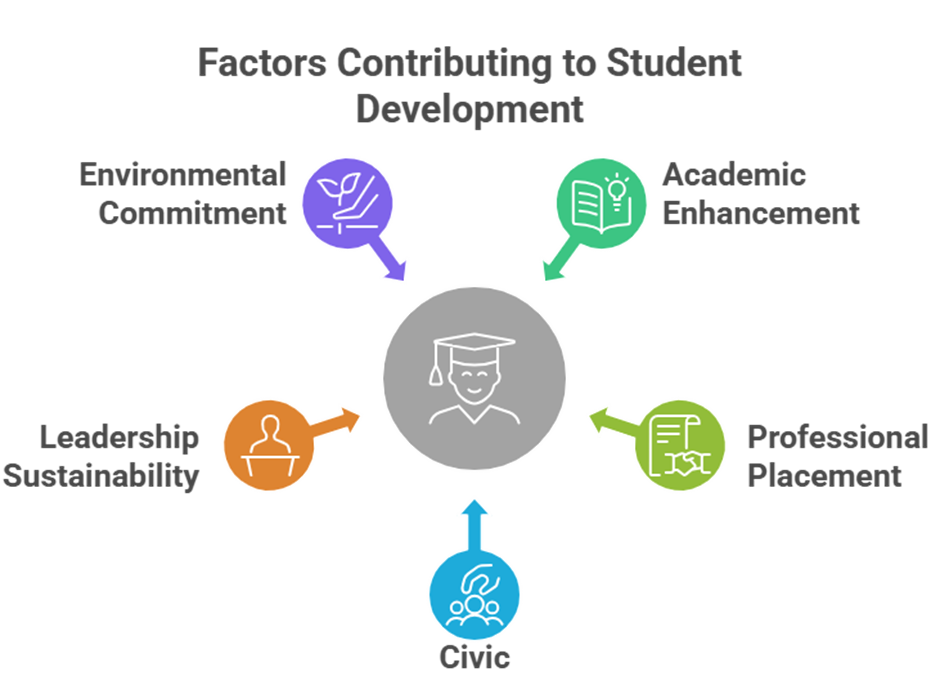
The long-term effectiveness of Student Development at KSRCE can be examined across five measurable domains:
1.Academic Enhancement Indicators
- Improved project innovation quality
- Higher interdisciplinary research participation
- Stronger analytical and presentation performance
2.Professional Placement Outcomes
- Increased employability rates
- Enhanced recruiter feedback on communication and leadership
- Growth in entrepreneurial ventures initiated by alumni
3.Civic Engagement Continuity
- Alumni involvement in community service
- Participation in sustainability-driven professional initiatives
- Continued association with Rotary networks and civic forums
4.Leadership Sustainability
- Alumni holding managerial or team-lead roles
- Engagement in public policy or NGO sectors
- Active participation in Social Responsibility Initiatives in Colleges beyond graduation
5.Environmental and Ethical Commitment
- Integration of sustainable design practices in professional projects
- Ethical compliance awareness in corporate environments
Technology-Driven Monitoring and Evaluation
Modern technology strengthens assessment mechanisms:
- Digital dashboards to track student participation in Extension Activities at KSRCE
- Data analytics platforms measuring event impact and outreach coverage
- Alumni tracking systems to evaluate career progression
- Online feedback systems for community stakeholders
The integration of analytics ensures that development initiatives remain data-informed rather than anecdotal.
Alumni Impact and Professional Outcomes
Graduates influenced by the Rotary Club at KSRCE, Women Empowerment Cell at KSRCE, Eco Club at KSRCE, and sustainability centres often demonstrate stronger adaptability in dynamic professional ecosystems. Employers increasingly seek candidates who combine technical expertise with ethical awareness and collaborative capability.
Alumni reflections frequently highlight:
- Improved crisis management skills
- Enhanced cross-functional team leadership
- Stronger public communication ability
- Greater resilience in competitive environments
These professional outcomes validate the structured model of Student Development at KSRCE.
Comparative Analysis with Traditional Engineering Models
Traditional engineering institutions often prioritize syllabus completion and examination performance. In contrast, the KSRCE model integrates Holistic Education in Engineering Colleges by embedding leadership and social responsibility into institutional DNA.
Key differences include:
- Event-based extracurricular vs. structured developmental ecosystems
- Certificate accumulation vs. competency transformation
- Isolated technical learning vs. interdisciplinary integration
- Reactive problem-solving vs. strategic civic engagement
This comparative advantage positions Student Development at KSRCE as a forward-looking institutional framework.
Common Evaluation Pitfalls
- Overreliance on participation numbers rather than impact quality.
- Inadequate alumni tracking for long-term measurement.
- Lack of structured reflection reports post-activity.
- Insufficient integration of feedback into policy updates.
Addressing these pitfalls strengthens institutional accountability.
Strategic Future Roadmap
To sustain long-term excellence, the institutional roadmap may include:
- AI-driven impact analytics
- Global university collaborations for sustainability research
- Expansion of interdisciplinary centres
- Structured mentorship programs connecting alumni and current students
Strategically, continuous innovation ensures that Student Development at KSRCE evolves alongside technological and societal transformations.
FAQ
1. What is Student Development at KSRCE?
Student Development at KSRCE is a structured model that combines academics, leadership training, sustainability awareness, and community engagement to ensure holistic student growth.
2. How does the Rotary Club at KSRCE help students?
The Rotary Club at KSRCE builds leadership, teamwork, and social responsibility through service activities and community outreach programs.
3. What are Extension Activities at KSRCE?
Extension Activities at KSRCE connect classroom learning with real-world community projects like rural development and environmental awareness.
4. What is the purpose of the Centre for Indian Knowledge Systems?
It promotes cultural and ethical understanding alongside technical education to support holistic learning.
5. How does the Centre for Sustainable Development Goals benefit students?
It aligns student projects with global sustainability priorities, encouraging responsible and innovative engineering solutions.
6. What roles do the Women Empowerment Cell and Eco Club at KSRCE play?
They promote inclusive leadership, gender equity, and environmental responsibility as part of Student Development at KSRCE.