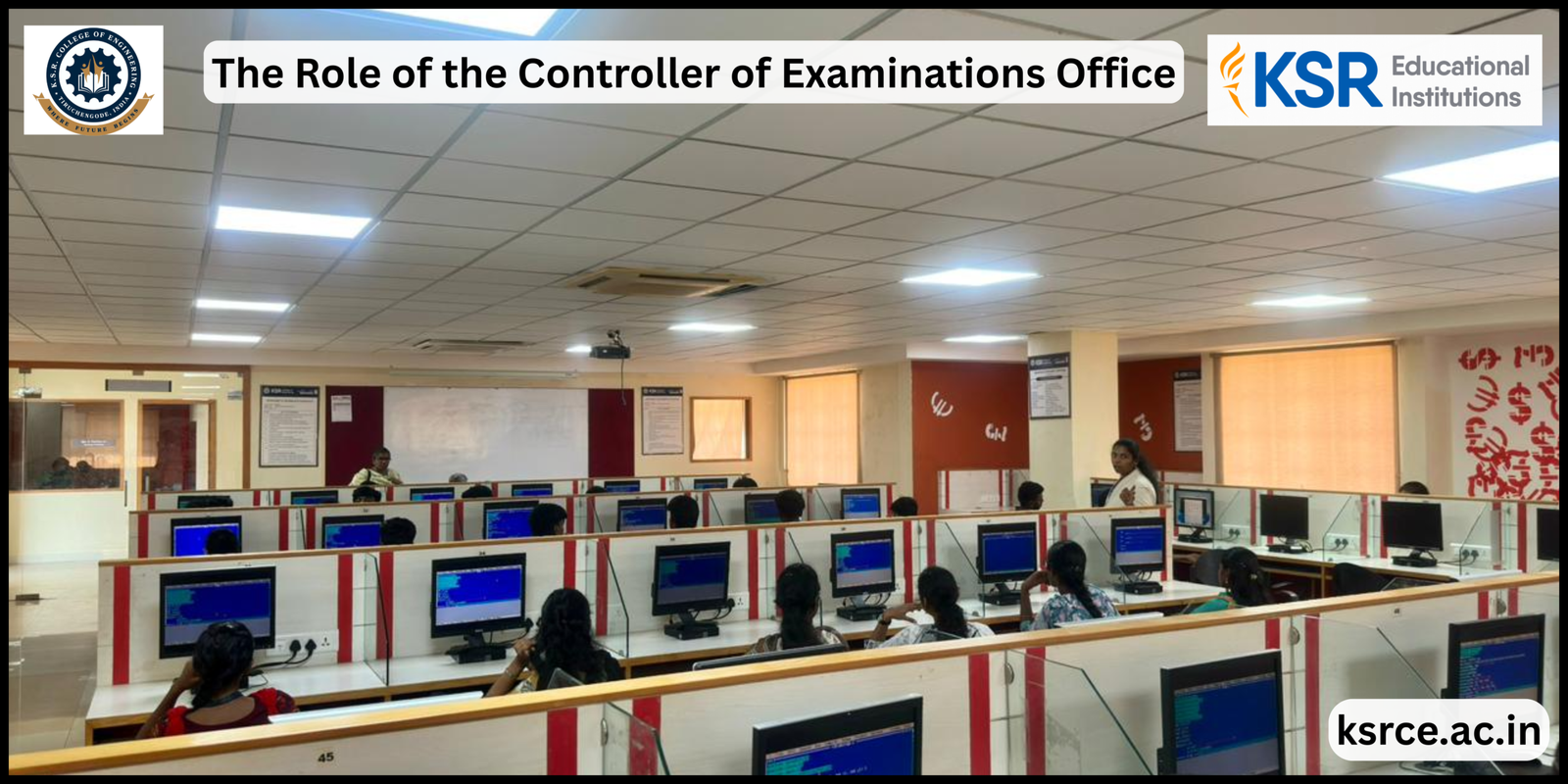
The Controller of Examinations office plays a major role in maintaining the quality and credibility of autonomous educational institutions. In autonomous colleges, the responsibility of conducting examinations and evaluating students rests within the institution itself. Because of this, the examination department must function with accuracy, discipline, and transparency. The office ensures that every examination-related activity is carried out systematically so students receive fair and reliable academic evaluation.
An effective autonomous college examination system helps institutions manage examinations independently while maintaining academic standards. The office coordinates multiple activities such as examination scheduling, internal assessments, question paper preparation, and result publication. Through proper planning and organized execution, the department contributes significantly to the smooth functioning of the academic system.
Key Responsibilities of the Controller of Examinations Office
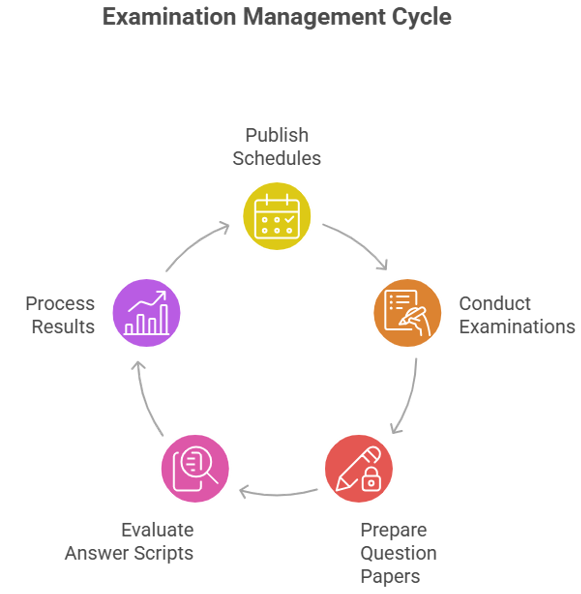
The Controller of Examinations office handles several important responsibilities throughout the academic year. One of its primary duties is preparing and publishing semester examination timetables based on the academic calendar. This helps students and faculty members stay informed about important examination dates and procedures.
The office also supervises confidential question paper preparation and ensures that examination materials are handled securely. During examinations, the department manages hall arrangements, invigilation processes, attendance verification, and student support. After examinations are completed, answer scripts are collected and evaluated carefully before results are processed and published.
Major Functions Include:
- Publishing semester examination schedules
- Conducting internal and semester examinations
- Coordinating secure question paper preparation
- Managing answer script evaluation
- Processing and publishing examination results
- Issuing grade sheets and mark statements
- Handling revaluation and supplementary examinations
- Recommending eligible students for degree certification
These activities are part of a structured examination management process that helps institutions maintain consistency, fairness, and professionalism, core values reflected in how KSRCE courses and programs shape the next generation of innovators.
Importance of Transparency and Accuracy
The Controller of Examinations office ensures transparency in every stage of the examination system. Strict procedures are followed to maintain confidentiality and avoid errors during examination operations. This organized approach improves student confidence and supports the credibility of the institution.
Technology has also become an important part of examination management in autonomous institutions — seen clearly in how ICT in education is transforming learning spaces at KSRCE across every academic function. Digital systems are widely used for hall ticket generation, attendance monitoring, result processing, and maintaining academic records. These tools help reduce manual work, improve accuracy, and speed up administrative tasks.
Benefits of an Organized Examination Office:
- Ensures fair student evaluation
- Improves accuracy in result processing
- Reduces delays in academic activities
- Maintains confidentiality and security
- Supports efficient communication with students
- Enhances institutional credibility and trust
The office also provides guidance and support for students regarding examination-related queries, revaluation procedures, and supplementary examinations. By addressing student concerns efficiently, the department ensures smooth academic progress.
Supporting Academic Excellence
The Controller of Examinations office, moreover, ensures transparency in every stage of the examination system. In addition, strict procedures are followed to maintain confidentiality and avoid errors during examination operations. As a result, this organized approach improves student confidence and also supports the credibility of the institution. Furthermore, the importance of transparent and student-centric assessment practices is highlighted in India’s National Education Policy 2020. Through organized planning, disciplined execution, and continuous coordination, the office contributes greatly to creating a professional and trustworthy academic environment for students and faculty members.