Choosing an engineering branch can feel confusing because every field offers different career paths. The best choice is not simply the “most popular” course. It should match what you enjoy, what you are good at, and where industries are growing.
The reference material highlights strong demand across software, AI, data, cybersecurity, automation, sustainable energy and technology-driven core engineering fields.
| Quick Career Check Ask yourself: Do I enjoy coding, machines, electronics, building things, data or healthcare? Your answer can help narrow down the right engineering path. |
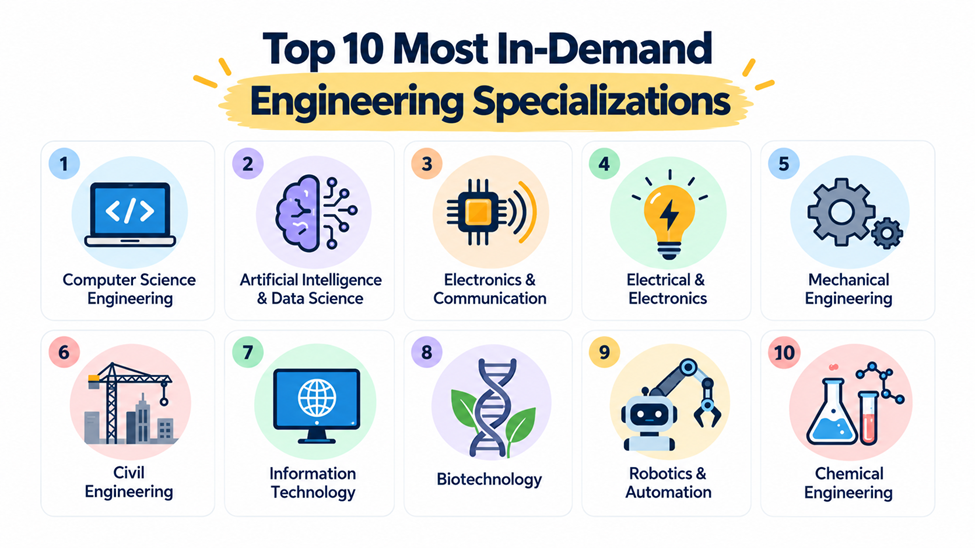
Top 10 Most In-Demand Engineering Specializations
| Specialization | What You Mainly Work With |
| Computer Science & Software Engineering | Software, apps and computer systems |
| Artificial Intelligence & Machine Learning | Smart systems, AI models and automation |
| Data Science & Data Engineering | Data, analytics and prediction |
| Cybersecurity Engineering | Network safety and digital protection |
| Industrial & Systems Engineering | Manufacturing, workflow and efficiency |
| Robotics & Automation Engineering | Robots, machines and smart automation |
| Renewable & Sustainable Energy Engineering | Solar, wind and clean-energy systems |
| Civil & Smart Infrastructure Engineering | Roads, buildings and smart cities |
| Aerospace & Drone Engineering | Aircraft, spacecraft and UAV technology |
| Biomedical & Biotechnology Engineering | Medical devices and healthcare technology |
These areas are highlighted because industries are increasingly using automation, digital systems, sustainable technology and advanced engineering solutions.
A Few Numbers Worth Knowing
Engineering Demand Snapshot
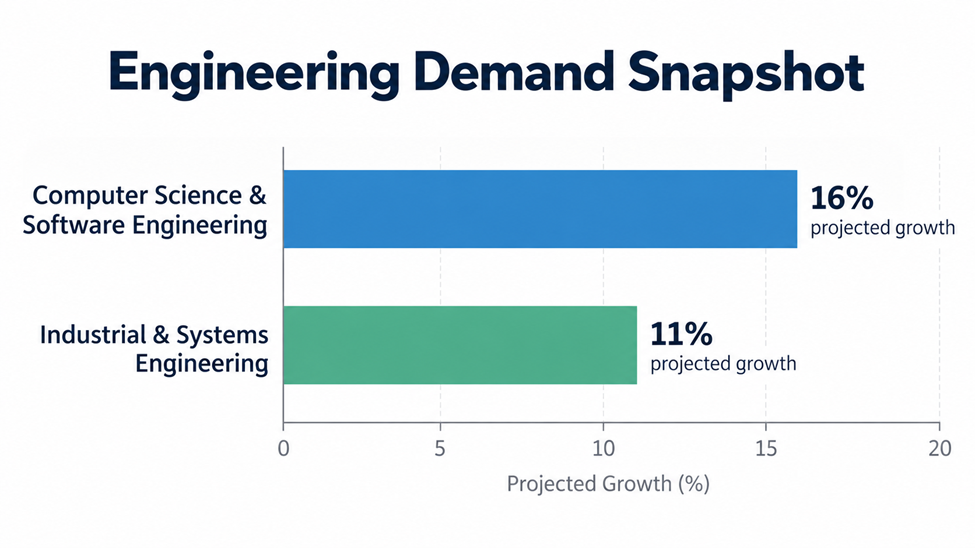
- 16% projected growth – Computer Science & Software Engineering
- 11% projected growth – Industrial & Systems Engineering
These figures in the reference material show how both digital engineering and modern core engineering are expected to stay important. For additional context, the US Bureau of Labor Statistics’ occupational employment projections provides information about employment trends in the United States. The 16% and 11% figures should be checked against their original source, period, and geographical coverage before being presented as verified projections.
If you are still unsure which branch to choose, this guide to choosing the right engineering courses after 12th can help you compare your interests and available course options.
Which Engineering Field May Suit You?
1. If You Enjoy Coding and Technology
Explore Computer Science, AI, Data Science or Cybersecurity.
These fields may suit students who enjoy logic, problem-solving, software and working with computers.
2. If You Like Machines and Building Things
Consider Robotics, Industrial Engineering, Civil or Aerospace Engineering.
These areas involve designing, testing, improving and building real systems.
3. If You Care About Sustainability
Renewable Energy Engineering focuses on areas such as solar, wind, energy storage and cleaner technologies.
4. If Healthcare Interests You
Biomedical Engineering combines engineering with medicine and can involve medical devices, bioinformatics and healthcare innovation.
How Should You Choose Your Engineering Specialization?
Before deciding, check these four things:
- Your favourite subjects
- Your natural strengths
- Career opportunities
- Internships and future growth
The source also recommends checking placement trends, industry connections, course reputation, and long-term career potential before selecting a branch. Students can read more about KSRCE engineering placement opportunities, skills training, and career growth to understand how career preparation can support their transition from college to employment.
FAQs
1. Which engineering specialization is most in demand?
Software, AI, data and cybersecurity are among the strong demand areas, while robotics, renewable energy and infrastructure are also growing.
2. Is core engineering still a good choice?
Yes. Industries still need engineers for manufacturing, infrastructure, energy, automation and physical systems.
3. How do I know which branch is right for me?
Start with your interests and strengths, then compare the skills, career paths and future opportunities in each field.
Choose a Specialization That Fits Your Future
The Top 10 Most In-Demand Engineering Specializations offer many different career directions. The right one is the branch that connects your interests, skills and future goals.
At KSRCE, use these factors to compare your options carefully and choose a field you will be interested in learning for the next four years and beyond.