Mechanical engineering offers career opportunities in manufacturing, automotive, robotics, electric vehicles, design, and automation. Students choosing Mechanical Engineering at KSR College can develop technical knowledge through classroom learning, practical laboratories, and industry-focused projects.
| Quick Tip: Practical skills, software knowledge, problem-solving, and industry exposure help mechanical engineering students become career-ready. |
What Do Students Learn?
Mechanical engineering covers:
- Engineering mechanics
- Strength of materials
- Thermodynamics
- Fluid mechanics
- Manufacturing technology
- Machine design
- CAD and 3D modelling
- Mechatronics
- Industrial automation
These subjects help students understand machine design, production, testing, and maintenance.
Students interested in exploring other engineering disciplines can also refer to Engineering Courses and Career Options at KSR College of Engineering.
| Key Point: Mechanical engineering combines theory, practical learning, and technical problem-solving to prepare students for different industries |
Practical Learning at KSR College
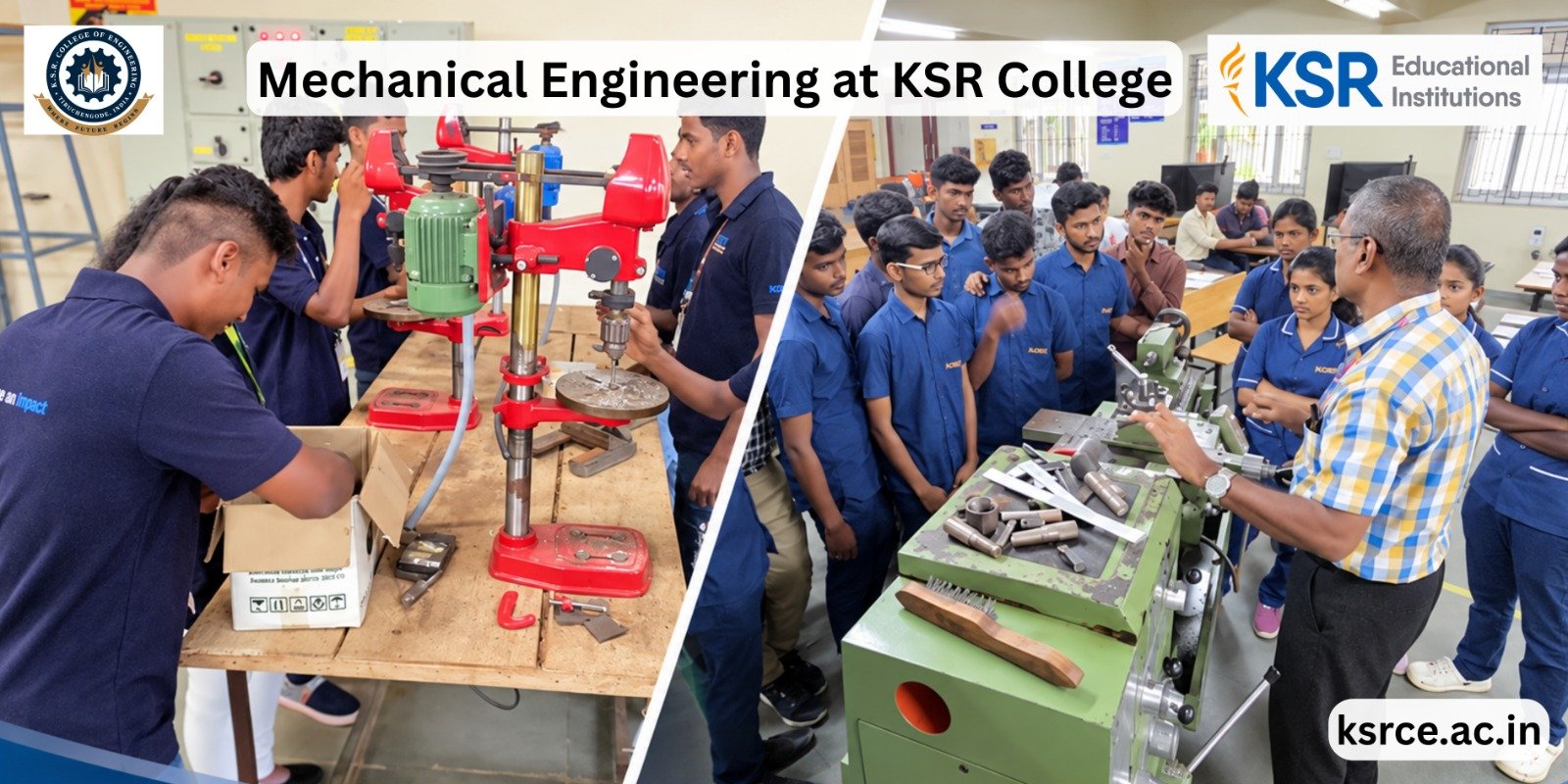
Laboratory practice helps students connect theory with real-world engineering.
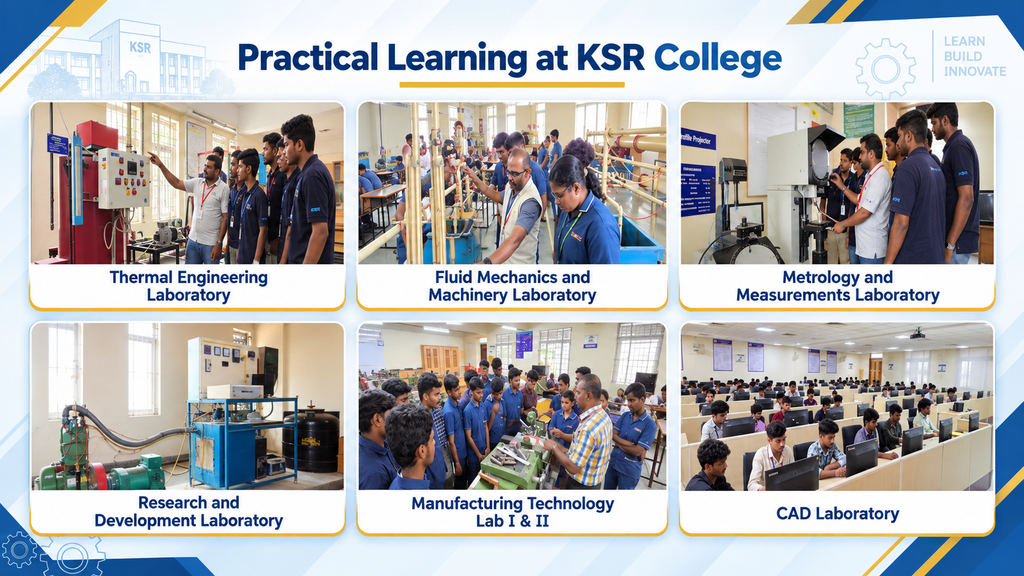
- Manufacturing Practices Laboratory: Introduces manufacturing methods, tools, machines, and production processes.
- Strength of Materials Laboratory: Covers forces, stresses, strains, and material deformation.
- Mechatronics Laboratory: Combines mechanical systems with electronics and control technologies.
- CNC Machining Laboratory: Provides practical exposure to computer-controlled machining.
- Thermal Engineering Laboratory: Introduces thermodynamics, heat transfer, and energy conversion.
Students can also gain practical knowledge through CAD, metrology, fluid mechanics, manufacturing technology, and research laboratories.
| Industry Connection: Practical training can help students understand the working methods used in manufacturing companies and engineering industries, including organisations such as Titan Company. |
Popular Courses After Mechanical Engineering
Students can choose higher studies or specialised courses such as:
- M.E. or M.Tech in Mechanical Engineering
- Machine Design
- Manufacturing Engineering
- Thermal Engineering
- Mechatronics
- Robotics and Automation
- Electric Vehicle Technology
- Industrial Automation
- MBA in Operations or Supply Chain Management
Career Options After Mechanical Engineering
Mechanical engineering graduates can work as:
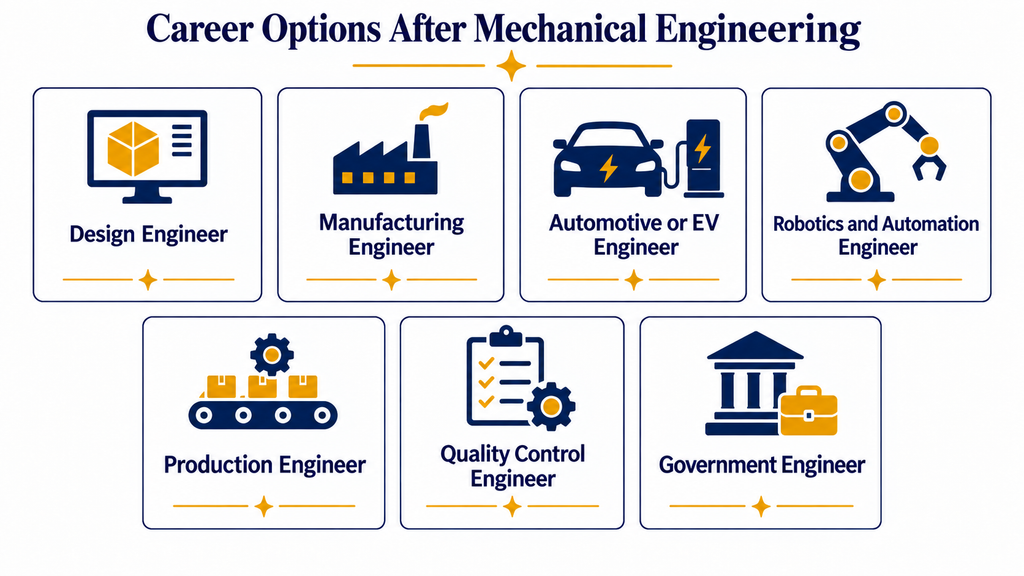
- Design Engineer: Creates machine parts and product models using CAD software.
- Manufacturing Engineer: Improves production methods, quality, and efficiency.
- Automotive or EV Engineer: Works on vehicle systems, electric mobility, and testing.
- Robotics and Automation Engineer: Develops automated machines and control systems.
- Production Engineer: Supervises manufacturing processes and factory operations.
- Quality Control Engineer: Checks product quality and manufacturing standards.
- Government Engineer: Explores technical roles through competitive examinations and public sector recruitment.
For a broader understanding of emerging career opportunities, students can also explore mechanical engineering jobs in demand by 2030.
Skills Students Should Develop
Important skills include:
- CAD and 3D modelling
- CNC machining
- Manufacturing processes
- Robotics and automation
- Problem-solving
- Basic programming
- Communication and teamwork
- Project and internship experience
From Classroom Learning to Careers
With strong technical knowledge, practical laboratory experience, and industry-focused learning, students can prepare for careers in manufacturing, automotive, EV technology, robotics, and automation. Developing skills in CAD, problem-solving, and project work can further improve their career opportunities.
Also read: Explore the Courses Offered at K.S.R. College of Engineering
Frequently Asked Questions
Graduates can enter design, manufacturing, automotive, EV technology, robotics, production, quality control, and government engineering.
Yes. Mechanical engineering knowledge is useful for vehicle design, thermal systems, materials, manufacturing, and testing.
Laboratories help students apply theoretical concepts through experiments, machine operation, measurements, and practical projects.