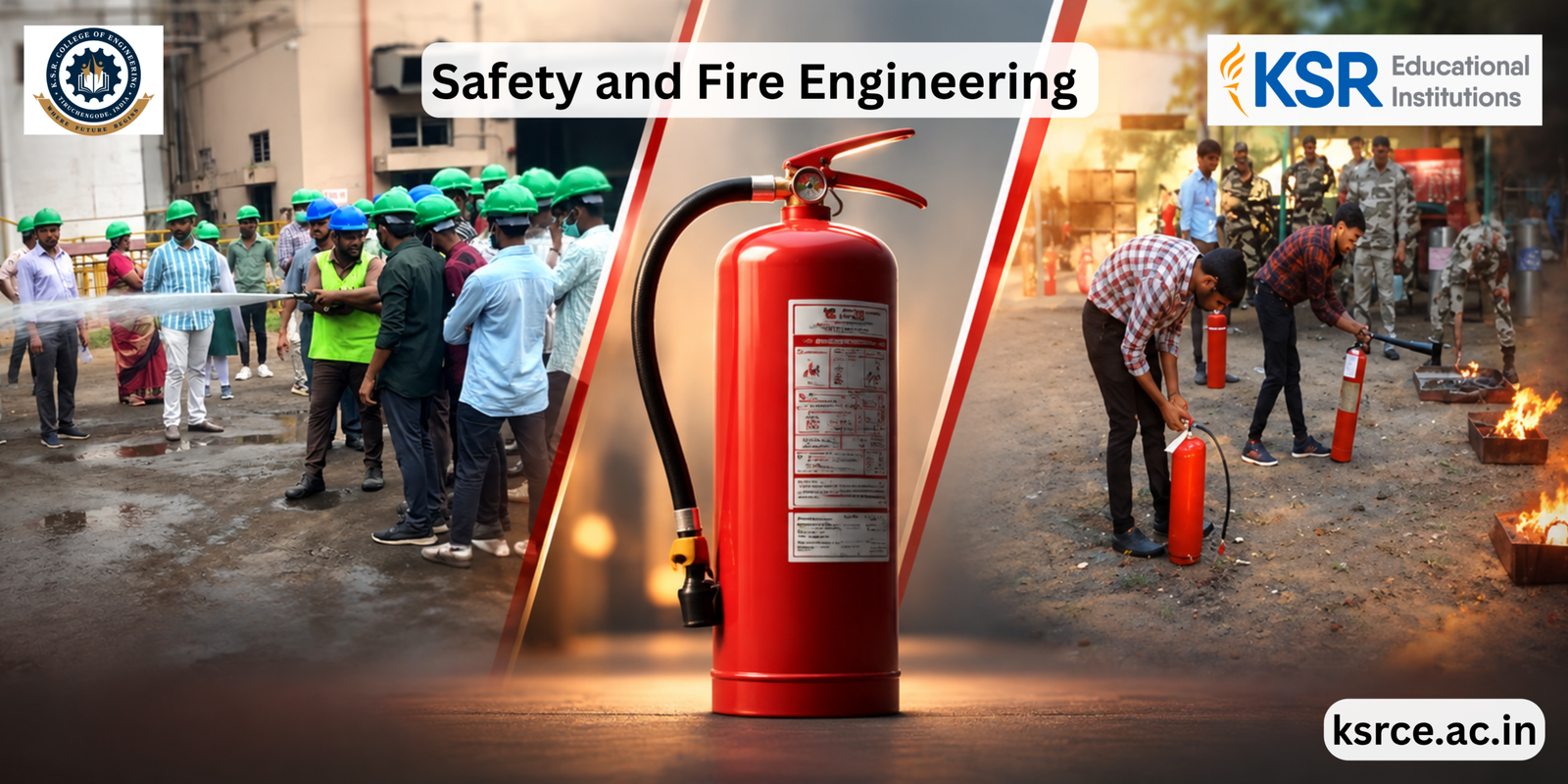
What if your engineering career could help protect lives, workplaces, and communities? Safety and Fire Engineering combines engineering knowledge with practical safety skills to create safer environments across different industries.
CAREER HIGHLIGHT : Safety and Fire Engineering can lead to careers in fire protection, workplace safety, risk assessment, emergency management, and safety system design.
What Do Safety and Fire Engineers Do?
Safety professionals work to identify risks and prevent accidents before they happen. Their responsibilities can include:
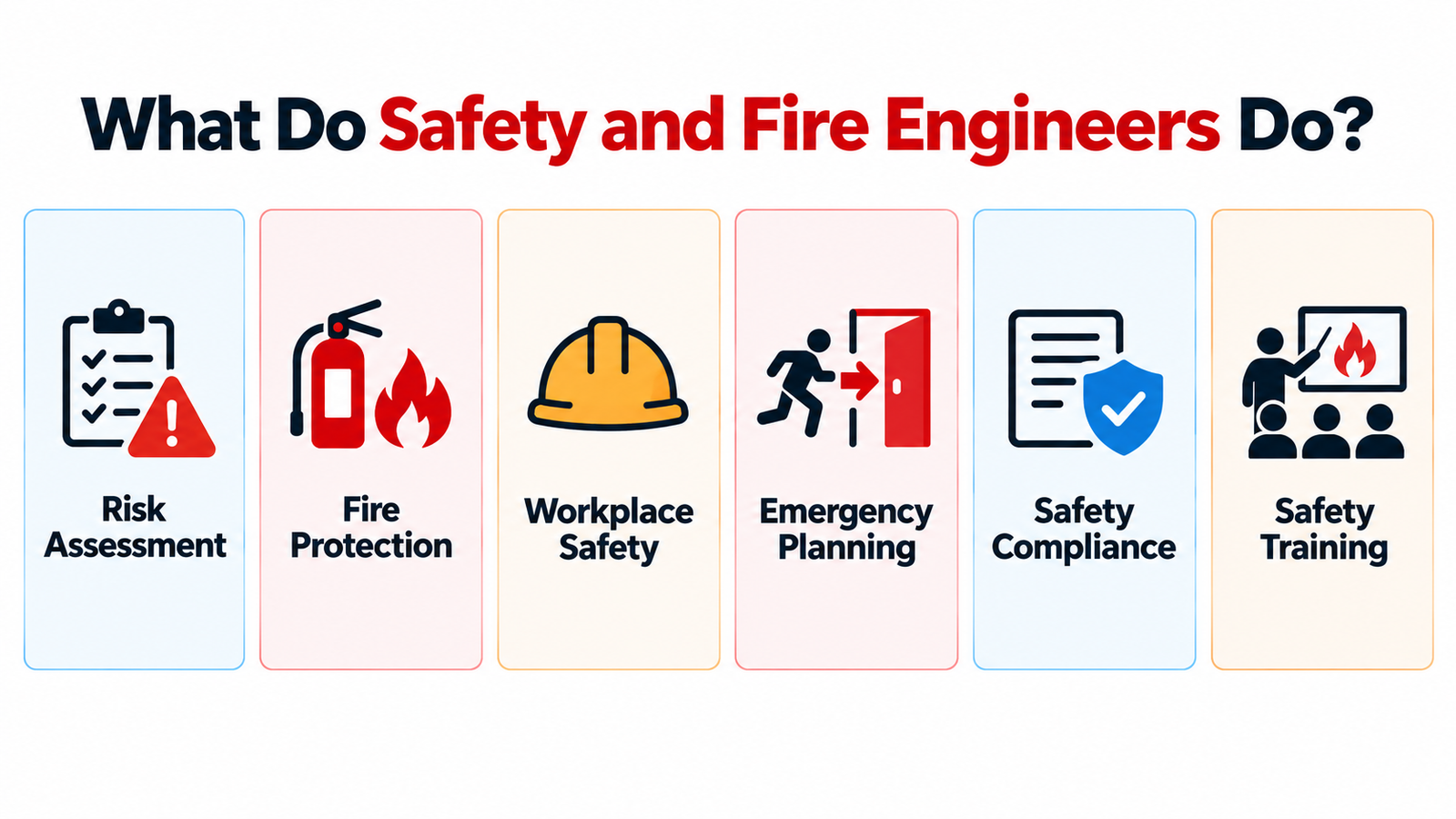
- Risk Assessment: Identify hazards and recommend safety measures.
- Fire Protection: Plan and maintain fire alarms, extinguishers, sprinklers, and suppression systems.
- Workplace Safety: Inspect work areas and promote safe working practices.
- Emergency Planning: Prepare emergency procedures, evacuation plans, and safety drills.
- Safety Compliance: Help organisations follow applicable safety rules and standards.
- Safety Training: Conduct awareness programmes and train employees in emergency procedures.
Top Career Opportunities
Students completing Safety and Fire Engineering can explore different roles based on their interests and skills.

1. Fire Protection Engineer
- Designs and reviews fire protection systems.
- Works with fire alarms, sprinklers, and suppression systems.
- Supports fire safety planning for buildings and industries.
2. Safety Officer / HSE Officer
- Conducts workplace inspections.
- Identifies unsafe conditions.
- Organises safety training and emergency drills.
3. Fire Safety Consultant
- Performs fire risk assessments.
- Provides safety recommendations.
- Supports organisations with fire safety planning.
4. Fire Inspector / Safety Auditor
- Checks safety arrangements in workplaces and buildings.
- Identifies potential fire and safety risks.
- Prepares inspection and audit reports.
5. Emergency Management Professional
- Develops emergency response plans.
- Coordinates preparedness activities.
- Helps organisations respond to emergencies effectively.
CAREER PATH: Safety and Fire Engineering → Internship → Junior Safety/Fire Role → Safety Engineer → Senior Professional → Safety Manager / Consultant
Where Can You Work?
The knowledge gained in Safety and Fire Engineering can be useful across several industries:
| Industry | Safety Focus |
| Manufacturing | Machinery and workplace safety |
| Oil & Gas | Fire and process safety |
| Construction | Site and worker safety |
| Chemical | Hazardous material and fire safety |
| Aerospace | Operational and fire safety |
| Infrastructure | Fire and life safety systems |
Practical Learning at KSRCE
The Department of Safety and Fire Engineering at K.S.R. College of Engineering was established in 2020 with an intake of 60 students, offering practical learning through specialised laboratories.
Students can also explore the Department of Safety and Fire Engineering to learn more about the department and its academic and practical learning opportunities.
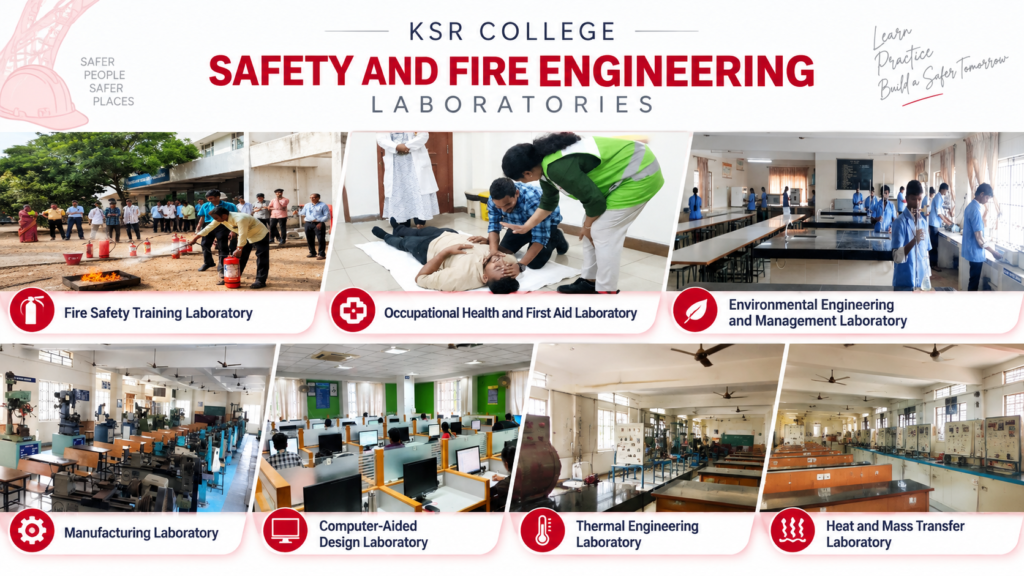
Hands-On Safety Training
Students gain exposure to fire extinguishers, CPR and first-aid equipment, environmental testing instruments, manufacturing equipment, and CAD tools.
The department highlights 100% industrial internship, practical-oriented training, and a 6 LPA average package on its website.
Ready to Build Your Future at KSRCE?
At K.S.R. College of Engineering, students can build engineering knowledge and practical skills to prepare for careers that help create safer workplaces, buildings, and industrial environments.
“Some careers build structures. Some careers protect the people inside them.”
Source: Career Prospects for Safety and Fire Engineering: Jobs, Scope & Future Opportunities
Frequently Asked Questions
1. What is Safety and Fire Engineering?
Safety and Fire Engineering focuses on fire protection, workplace safety, risk prevention, and emergency preparedness.
2. What jobs can I get after Safety and Fire Engineering?
Graduates can explore roles such as Fire Protection Engineer, Safety Officer, HSE Officer, Fire Safety Consultant, Safety Auditor, and Emergency Management Professional.
3. Which industries hire Safety and Fire Engineering graduates?
Opportunities are available in manufacturing, construction, oil and gas, chemical industries, aerospace, infrastructure, and other sectors.
4. Does K.S.R. College of Engineering offer Safety and Fire Engineering?
Yes. K.S.R. College of Engineering has a Department of Safety and Fire Engineering that provides practical training through specialised laboratories.